
Inspection Readiness
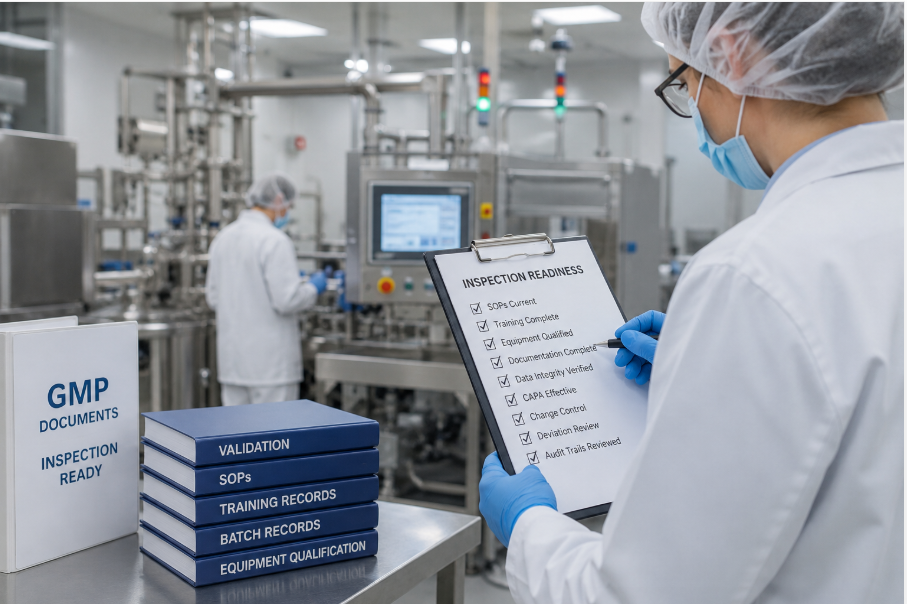
The FDA's inspection approach is evolving toward risk-based oversight, continuous inspection readiness, increased use of remote assessments, and more targeted inspections. For pharmaceutical manufacturers, the days of preparing only when an audit is announced are rapidly disappearing. FDA is increasingly looking for evidence that quality systems are operating effectively every day, not just during an inspection.
Key FDA Inspection Changes Impacting Manufacturers
1. One-Day Inspectional Assessments
In 2026, the FDA launched a pilot program for one-day inspectional assessments. These shorter, focused inspections are designed to quickly evaluate compliance and identify risk areas. Facilities are selected using factors such as product type, inspection history, and operational risk. Inspectors can expand the inspection if concerns are identified.
2. Increased Risk-Based Oversight
The FDA is using inspection data, compliance history, and risk models to determine where to focus resources. Facilities with recurring quality issues, weak CAPA systems, or poor data integrity practices may see increased scrutiny.
3. Remote Regulatory Assessments (RRAs)
The FDA has formalized guidance for conducting remote assessments, allowing investigators to review records, procedures, and quality systems before or instead of an on-site inspection. Companies must be prepared to rapidly provide complete and accurate electronic records.
4. Greater Use of Data Analytics and Technology
The agency is investing heavily in AI and advanced analytics to improve regulatory oversight and inspection targeting. Manufacturers should expect inspectors to arrive with a deeper understanding of historical compliance trends and submitted data.
How Pharmaceutical Manufacturers Should Prepare
1. Establish a State of Continuous Audit Readiness
Rather than preparing for inspections quarterly or annually:
Maintain current SOPs and training records.
Conduct routine GMP walkthroughs.
Review open deviations and CAPAs weekly.
Ensure quality metrics are current and readily available.
Perform regular mock FDA inspections.
Question to ask: Could your site host an FDA inspection tomorrow without additional preparation?
2. Strengthen Data Integrity Programs
FDA investigators continue to focus heavily on ALCOA++ principles:
Attributable
Legible
Contemporaneous
Original
Accurate
Complete
Consistent
Enduring
Available
Validation teams should verify:
Audit trails are enabled and reviewed.
Electronic records are protected.
User access management is controlled.
Data backup and recovery processes are tested.
3. Improve CAPA Effectiveness
One of the most common FDA observations remains ineffective CAPA systems.
Ensure CAPAs:
Identify true root causes.
Include measurable effectiveness checks.
Are completed on time.
Demonstrate trend analysis.
Inspectors increasingly look for evidence that problems stay fixed after closure.
4. Develop Inspection-Ready Documentation
For CQV organizations, documentation should be inspection-ready at all times:
Validation Master Plans
User Requirement Specifications (URS)
Functional Specifications
Design Specifications
IQ/OQ/PQ Protocols
Traceability Matrices
Commissioning Documentation
Change Controls
Deviations
Training Records
Documents should be easy to retrieve electronically and linked through a clear validation lifecycle.
5. Focus on Risk Management
The FDA's current inspection philosophy aligns with risk-based decision making.
Manufacturers should be able to demonstrate:
Formal risk assessments
Risk-based validation strategies
Critical quality attribute identification
Critical process parameter monitoring
Supplier risk management
Inspectors increasingly ask, "How did you determine this was the appropriate level of testing or validation?"
6. Train Personnel for Real-Time Interviews
Many inspection findings arise from employee interviews rather than documentation.
Personnel should understand:
Their role in the quality system
Relevant SOPs
Escalation processes
Deviation management
Change control requirements
Avoid scripted answers. Employees should confidently explain what they do and why they do it.
7. Ensure Digital Accessibility
With remote assessments and rapid inspection formats becoming more common:
Organize electronic quality records.
Validate document management systems.
Create inspection-ready dashboards.
Ensure SMEs can quickly retrieve requested information.
The speed at which records are produced often influences the inspector's perception of control over the quality system.
Recommendations for CQV Teams
As a CQV organization supporting pharmaceutical startups and manufacturing expansions, priorities should be:
Mock FDA inspections focused on startup facilities
Data integrity assessments
CAPA system health checks
Validation documentation audits
Electronic record readiness reviews
Inspection response team training
Risk-based validation strategy reviews
These activities not only prepare sites for FDA inspections but also accelerate startup timelines by identifying compliance gaps before commercial manufacturing begins.
Bottom Line
The FDA's direction is clear: continuous compliance, risk-based oversight, and rapid inspection readiness. Companies that maintain strong quality systems, robust documentation, effective CAPAs, and inspection-ready personnel will be best positioned to succeed under the agency's evolving inspection model.